
NEWS AND JOURNAL
[RARE ITEM] Showcasing an Exceptionally Rare Fur Do!!
[Product Introduction]
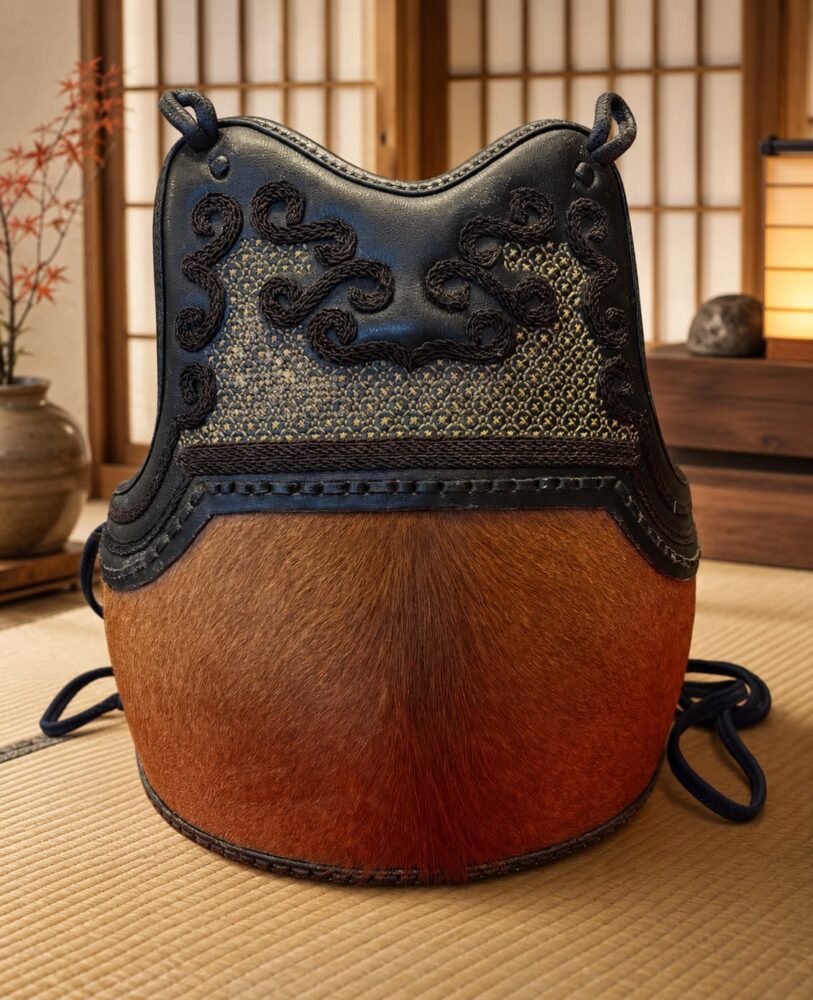
This is an exceptionally rare Do (chest protector). ✨
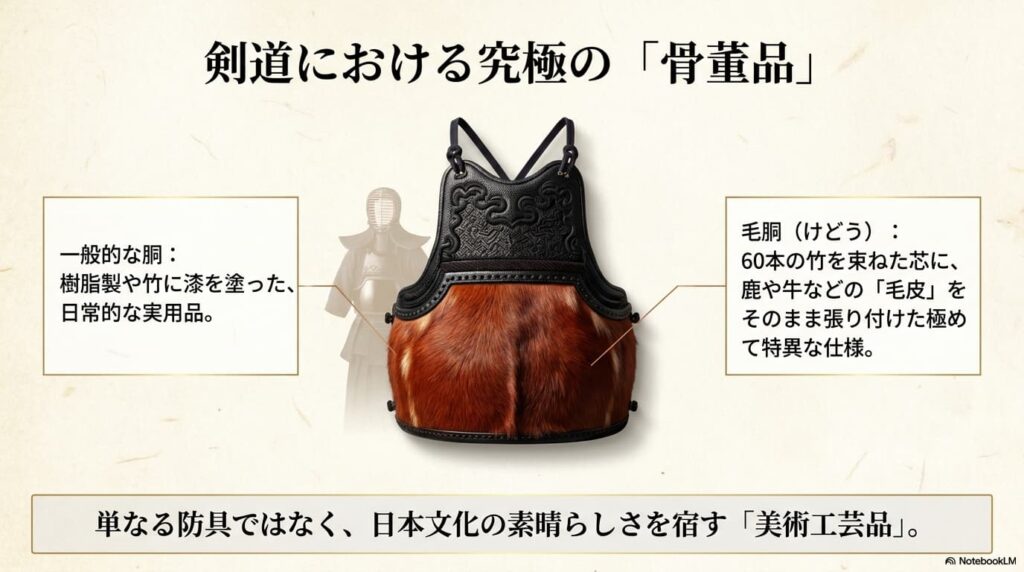
It is an antique piece, crafted by applying deer skin over 60 bamboo slats. Master craftsmanship! 🔥 I am truly moved by the magnificence of Japanese culture.
Unlike standard Do made of resin or lacquered bamboo, this is an incredibly rare type where animal fur (primarily deer or cow) is stretched directly over the Do-dai (the part that covers the stomach). This is generally known as a “Kedo” (fur-covered Do).
Detailed Design and Craftsmanship of Each Part
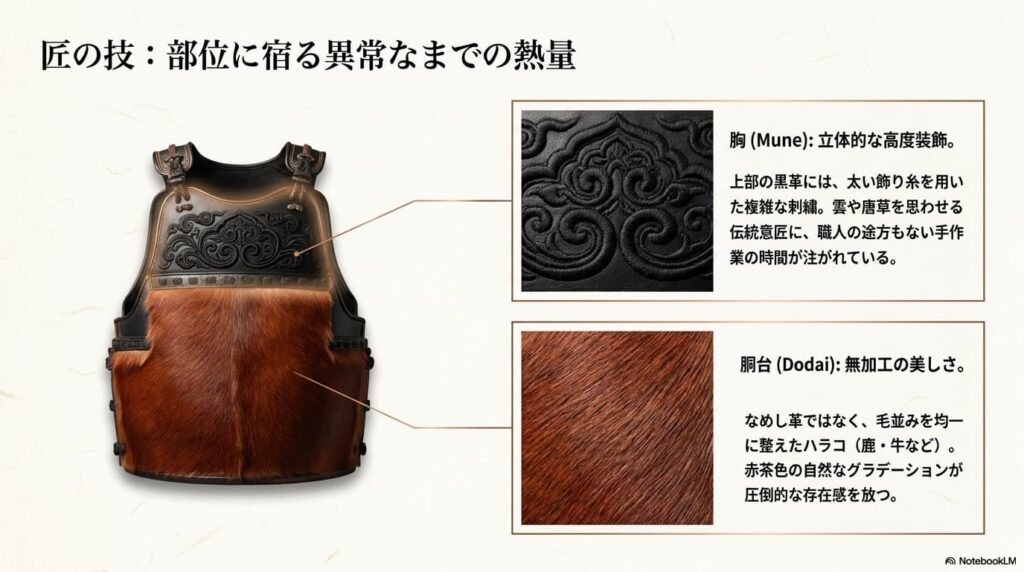
- Advanced Decoration on the Mune (Chest Area): The black leather on the upper section features highly three-dimensional and intricate embroidery using thick decorative threads. The traditional design, reminiscent of clouds or arabesque patterns, clearly shows that a tremendous amount of time and artisanal skill went into this piece compared to standard, practical Kendo gear.
- The Beautiful Fur on the Do-dai: Instead of tanned leather, the lower section is covered with fur (such as unborn calf, deer, or cow) that retains its natural hair. The fur is perfectly uniform, and its natural, beautiful reddish-brown gradient instantly catches the eye.
The Historical Roots of the “Kedo” and Its Modern Use
- Lineage from Sengoku Period Armor: During Japan’s Sengoku (Warring States) period, some armors (like Tosei Gusoku) featured Kebiki-do (fur-covered torsos) utilizing bear, wild boar, or deer fur. These were used for cold weather protection, waterproofing in the rain, intimidating enemies, and projecting the commander’s dignity. This piece of Kendo gear inherits the aesthetics and history of those samurai.
- Value as an Art Craft: In modern Kendo, a Kedo is almost never used in daily practice or regular matches. Receiving direct strikes from a Shinai (bamboo sword) would cause the fur to fall out and damage the gear. Consequently, today it is treated as a highly expensive and rare custom-made item, primarily used by high-ranking instructors for special demonstrations, or appreciated for its value as an art piece or collector’s item.
A “Status Symbol” of the Sengoku Period Why was fur applied in the first place? It is a remnant of the “self-branding” practiced by Sengoku warlords. Wearing fur on the battlefield was a way to broadcast that one “possessed the power of wild beasts,” while simultaneously flaunting to others, “I have the financial power to commission such a rare, custom-made item.” To put it in the context of the modern business world, it gives off a sense of overwhelming affluence and a touch of madness—like “showing up to a muddy worksite deliberately wearing a multi-million-yen custom high-end watch.”